

We tend to focus on the negative—especially when it comes to the news. But every now and then, it’s worth stepping back and reminding ourselves that not everything is going wrong. Progress is being made, and sustainable fashion is no exception. From secondhand platforms breaking records to artists using their influence for good, here are five exciting developments proving that change is not only possible—it’s already happening.
Fashion App Phia by Sophia Kianni & Phoebe Gates
Climate activist Sophia Kianni and Phoebe Gates have launched Phia, a free iOS app and browser extension designed to make online shopping smarter, more affordable, and more sustainable. Using AI, the tool helps users instantly compare prices for the items they’re browsing and suggests secondhand alternatives when available.
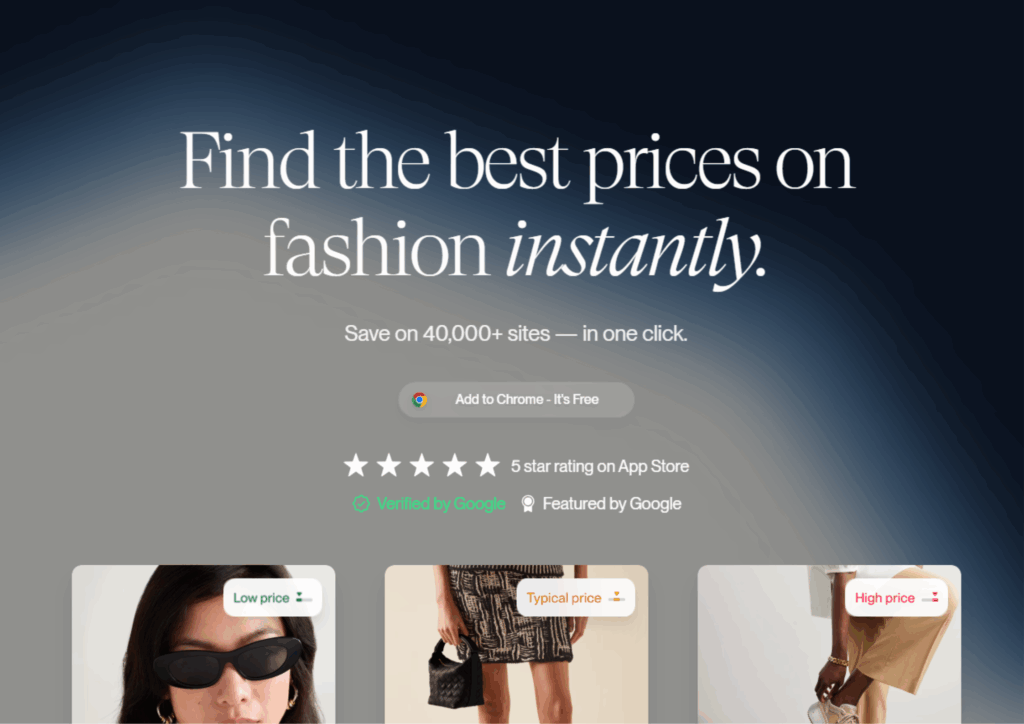
At the heart of Phia is its powerful price-checking technology, built on a database of over 250 million secondhand listings. When a shopper views an item, Phia tells them whether the price is fair, typical, or overpriced. If it’s too high, the app suggests identical or similar options—often at better prices—from trusted resale platforms.
Phia works across more than 40,000 online shopping sites and supports fashion purchases from all brands, from high-end designers like Louis Vuitton to everyday favourites like Nike. It offers personalised recommendations based on size, style preferences, and past shopping behaviour. The app pulls in listings from top resale platforms, including The RealReal, Vestiaire Collective, ThredUp, StockX, eBay, and Poshmark, allowing users to search them all at once.
For more information on Phia, please visit their website.
Billie Eilish Partners with BLACK PEARL
Creative sustainability agency BLACK PEARL has teamed up with Billie Eilish for HIT ME HARD AND SOFT: THE TOUR to launch a Sustainable Fashion Guide—an innovative resource encouraging fans to explore each European tour stop through a more conscious and creative fashion lens. The guide, which is available in both English and local languages, highlights secondhand shops, ethical designers, repair studios, and grassroots fashion initiatives in every city on the tour.

Rather than promoting perfection, the guide embraces sustainable fashion as a journey built on small, intentional choices—like choosing vintage pieces, supporting local makers, or learning to mend clothes. “This isn’t about being perfect—it’s about being part of it,” said BLACK PEARL CEO Samata Pattinson. The initiative empowers fans to engage meaningfully with local fashion communities and rethink their style habits, making sustainability not only accessible but also inspiring. It’s a unique way to merge music, culture, and climate-conscious action on a global stage.
This project is a natural fit for BLACK PEARL, an agency rooted in the belief that sustainability must be culturally relevant and accessible. BLACK PEARL works across fashion, design, music, and entertainment to make environmental and social impact part of everyday culture. Through educational programs, strategic storytelling, and circular design solutions, the agency helps artists, brands, and communities create change that’s both creative and lasting.
With this collaboration, BLACK PEARL and Billie Eilish are proving that concerts can be more than music—they can also be platforms for powerful cultural shifts.
For more information, please visit the BLACK PEARL website.
A win for Second-hand Fashion - Vinted on the Rise
In 2024, secondhand fashion platform Vinted achieved record growth, with revenue rising by 36% and net profit surging by 330% compared to 2023. This performance reflects the increasing popularity of secondhand shopping and marks a significant milestone for the sustainable fashion movement. As more consumers turn to re-commerce to save money and reduce waste, Vinted continues to prove that sustainability and business success can go hand in hand.
The company expanded its marketplace into new countries—including Croatia, Greece, and Ireland—and introduced new categories such as electronics and luxury fashion. These moves help broaden the appeal of secondhand shopping beyond just clothing, making it easier for people to buy and sell a wider range of pre-owned items. Vinted also continued investing in Vinted Go, its logistics arm, making shipping more affordable and accessible across Europe, and further developed Vinted Pay to simplify transactions on its platform.
EU Approves Environmental Scoring System for Fashion Brands
The European Commission has officially approved a new environmental scoring system for clothing and footwear: the Product Environmental Footprint (PEF). This science-based tool helps fashion brands measure and improve the environmental impact of their products across their entire lifecycle—from raw materials to disposal. It’s designed to create a common framework across the EU, helping companies reduce their environmental footprint and comply with future regulations.
However, there’s a catch: the EU has ruled that the score cannot yet be used in marketing or shown to consumers. This means brands can only use the tool internally to identify environmental “hotspots” and make improvements, but not to promote products as more eco-friendly based on the score.
The decision comes amid parallel efforts in France, which is developing its own eco-score for textiles that could allow limited consumer-facing labelling by late 2025. While the PEF system is a step forward for standardising sustainability in fashion, its current business-to-business restriction highlights the EU’s cautious approach to green claims and consumer communication. Still, the move lays crucial groundwork for greater transparency and accountability in the fashion industry—and could pave the way for future consumer-facing labels.
Kering’s New Water Strategy Aims for Net Positive Impact by 2050
Luxury fashion group Kering—parent company of brands like Gucci, Balenciaga, Yves Saint Laurent, Bottega Veneta, and Alexander McQueen—has launched its first dedicated water strategy, aiming to have a Net Water Positive impact by 2050. This means Kering wants to give back more clean water to the environment than it uses throughout its operations and supply chain.
This strategy, announced last month, is a response to the growing risks linked to water scarcity, pollution, climate change, and biodiversity loss—all of which are deeply connected. The fashion industry, particularly in textile production and dyeing, consumes vast amounts of freshwater. For example, making a single pair of jeans takes around 3781 litres of water, mostly to grow the cotton. Additionally, untreated wastewater from factories often pollutes rivers and harms ecosystems, especially in regions where environmental regulations are weak.
To address these challenges, Kering has identified 10 key water basins around the world where its operations have the most impact. The company will work with local partners in these areas to improve water quality, availability, and access for both people and nature.
Kering’s strategy is built around three core programs:
- Water-Positive Raw Materials
The company will prioritise sourcing raw materials that are less harmful to water systems. This includes using recycled fabrics, innovative textile alternatives, and materials grown through regenerative agriculture. These approaches help reduce pollution and support healthier watersheds. - Water-Positive Stewardship Program
Kering will enhance water efficiency and water quality across its own facilities and its suppliers’ factories. It plans to do this by adopting best practices and new technologies—such as chrome-free leather tanning—to minimize water use and pollution. - Water Resilience Labs
In each of the 10 priority regions, Kering will set up Water Resilience Labs. These labs will bring together local communities, suppliers, governments, and other businesses to work on solutions tailored to local water challenges. The goal is to restore and protect freshwater ecosystems using a joined-up approach that considers climate, biodiversity, and water together.

For more information on Kering’s water strategy, please visit their website.
Sources
Images link back to their sources, with full credit given to the respective owners.
- Sophia Kianni, Phoebe Gates launch fashion app Phia
- Bill Gates Says He Probably Would Have Helped Fund Daughter Phoebe’s Business, but ‘Luckily’ She Never Asked
- Black Pearl Creates Sustainable Fashion Guide for Billie Eilish’s HIT ME HARD AND SOFT: THE TOUR European Tour
- About BLACK PEARL
- Vinted delivers strong, profitable growth, while investing in Vinted Go and Vinted Pay
- Vinted quadruples profit in 2024 as revenue climbs to €813.4 million
- PEF Apparel & Footwear
- EU approves new environmental score system for fashion brands
- Product Environmental Footprint method
- Jeans that don’t cost the earth.
- Kering unveils its first dedicated water strategy for a net positive impact by 2050
- Kering