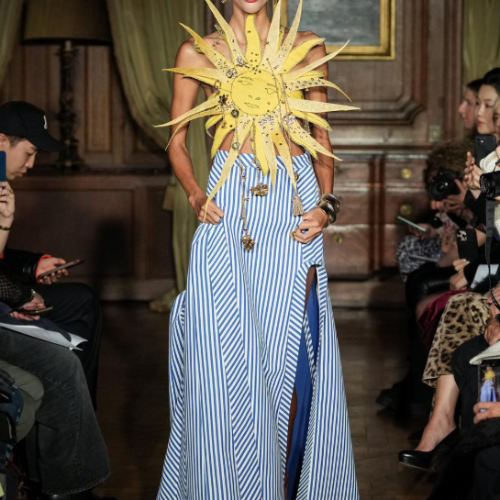
Last week, the fashion world turned to Paris as Haute Couture Fashion Week kicked off. Twice a year, the city becomes the heartbeat of luxury, craftsmanship, and pure artistic expression. The most prestigious fashion houses unveil their latest masterpieces, celebrities flood the front rows, and the streets come alive with an unparalleled sense of luxury.
But make no mistake—this is not your typical fashion week. Haute Couture, meaning “high sewing” in French, represents fashion at its most elevated. Every garment is meticulously handcrafted, tailored to perfection, and adorned with the finest materials—delicate silk, intricate embroidery, and dazzling beadwork. These aren’t just clothes; they are works of art, with some pieces taking hundreds, even thousands, of hours to create. Only an elite group of designers, approved by the Fédération de la Haute Couture et de la Mode (FHCM), can participate, making Haute Couture Week as exclusive as the clientele it serves. These creations are rarely seen outside red carpets and museum exhibits, existing in a realm where fashion meets fantasy.
In contrast, Ready-to-Wear Fashion Week, while still glamorous, is far more accessible. Often confused with Haute Couture, this week focuses on practical luxury—collections designed for mass production and everyday wear. Many of the same iconic brands participate in both events, but the difference is striking: while Haute Couture is about pushing creative boundaries, Ready-to-Wear sets the trends that will define global fashion in the coming seasons.
From dreamlike runway spectacles to boundary-pushing craftsmanship, Haute Couture Fashion Week remains the pinnacle of sartorial excellence—where fashion transcends clothing and becomes pure artistry.
Sustainability Meets Haute Couture
Sustainability is a growing conversation in the fashion industry, but how does it apply to haute couture?
Unlike fast fashion, which thrives on mass production and fleeting trends, haute couture operates on an entirely different level. These garments are not just made; they are crafted to last a lifetime—if not generations. Every piece is meticulously sewn by hand, using the finest materials, with a level of care and precision that makes them true investments (for those who actually can afford them) rather than disposable fashion. This dedication to artistry, quality, and limited production naturally makes haute couture more sustainable than the fast-moving cycles of both high-street and luxury ready-to-wear fashion.
Yet, despite its exclusivity and slower production model, sustainability is still not a primary focus for most couture houses. Many brands continue to use new, resource-heavy materials, and runway spectacles often come at a high environmental cost.
However, one designer is leading the charge for a truly sustainable haute couture future: Ronald van der Kemp.
Haute Couture Designer: Ronald van der Kemp
In an industry where luxury and excess often go hand in hand, Ronald van der Kemp (RVDK) stands out as a visionary designer redefining haute couture through sustainability. As one of the first designers to embrace upcycling at the highest level of fashion, Van der Kemp proves that haute couture can be both luxurious and responsible—without compromising creativity.
Ronald van der Kemp launched his label, RVDK, in 2014 with a mission to disrupt traditional couture. Unlike most haute couture houses, which rely on newly produced fabrics and elaborate sourcing, RVDK exclusively uses deadstock materials, vintage fabrics, and repurposed textiles. Every collection is created from what already exists—ensuring that nothing goes to waste. The designs are hand-made by local artisans in the Netherlands. The designs are limited-edition and are seasonless and timeless.
Van der Kemp’s approach directly challenges the idea that haute couture must be wasteful. His philosophy? True luxury isn’t about excess—it’s about uniqueness, craftsmanship, and sustainability.
Spring 2025 Couture: "Let the Sun Shine In"
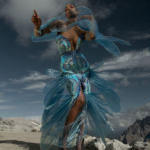
Last week, van der Kemp showed its newest couture collection, “Let the Sun Shine In”. This collection was a vibrant celebration of optimism and creativity. Van der Kemp utilised an eclectic mix of vintage and surplus fabrics, crafting each piece as a unique work of art. The show opened with “La Reine Soleil” (“The Sun Queen”), a tiered mermaid gown featuring lustrous jacquards and golden silk radiating from the neckline. This ensemble set the tone for a series of designs that exuded both luxury and sustainability.
The Complex Relationship Between Sustainability and Haute Couture
Sustainability is more important than ever in the fashion industry, and haute couture—despite its craftsmanship and exclusivity—cannot ignore its role in this conversation. While couture is inherently more sustainable than fast fashion due to its slow production, high-quality materials, and timeless design, its overall impact remains limited.
The reality is that haute couture is only accessible to an elite few, making its sustainability efforts somewhat symbolic rather than industry-changing. Unlike mass-market brands that produce millions of garments, couture houses create only a handful of pieces per collection—meaning their environmental footprint is relatively small to begin with. While some designers, like Ronald van der Kemp, are making real strides in upcycling and ethical fashion, the exclusivity of couture means that these innovations don’t always translate to broader change within the industry.
That being said, haute couture has the power to lead by example. As a space where creativity knows no bounds, it can set new standards for sustainability—whether through innovative materials, zero-waste techniques, or responsible sourcing. If these ideas trickle down into ready-to-wear and mainstream fashion, haute couture’s influence could extend far beyond its privileged clientele, shaping a more sustainable future for the industry as a whole.
Sources
Images link back to their sources, with full credit given to the respective owners.
The header image can be found here.
Image Credit: Fédération de la Haute Couture et de la Mode (FHCM)