It’s been a while since my last post for the series “High Fashion: The sustainability initiatives of…” in which we examine well-known luxury brands to see how they are doing in the sustainability realm.
This week, we’ll discuss high fashion brands Loewe, Chloé, and ACNE Studios.
Loewe
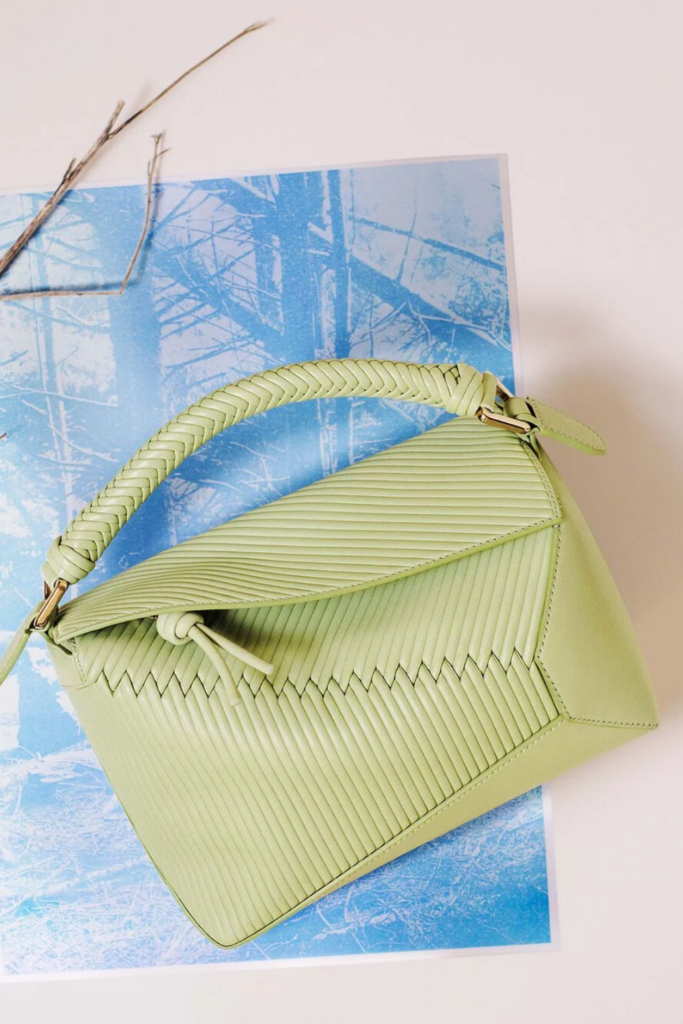
Loewe’s legacy dates back to 1872 when Enrique Loewe founded the brand with a focus on leather craftsmanship. By 1905, Loewe’s quality and elegance earned it the prestigious title of official supplier to the Spanish royal family. Today, the brand remains celebrated for its leather goods—most notably the iconic Puzzle Bag—while expanding its portfolio to include high-end apparel and fragrances. Now part of LVMH, Loewe entered a new era in 2013 under the creative direction of Jonathan Anderson, who brings a modern edge to the brand’s timeless heritage.
Loewe has put an emphasis on sourcing high-quality, low-impact materials. Recognising the importance of traceability, the brand ensures that much of its leather comes from tanneries certified by the Leather Working Group (LWG), which upholds environmental standards in the leather industry.
Additionally, Loewe is working to incorporate more recycled, upcycled, and organically grown materials into its collections. The brand is testing various low-impact materials, with a focus on cotton that is grown without toxic pesticides and requires less water—important steps for conserving soil quality and protecting natural resources.
In 2021, Loewe launched ‘The Surplus Project’, an initiative that creatively repurposes leftover materials from past collections to craft new, low-impact items. This project breathes new life into iconic Loewe leathers, like those used in the Woven Basket Bag, emphasising the brand’s commitment to circular fashion.

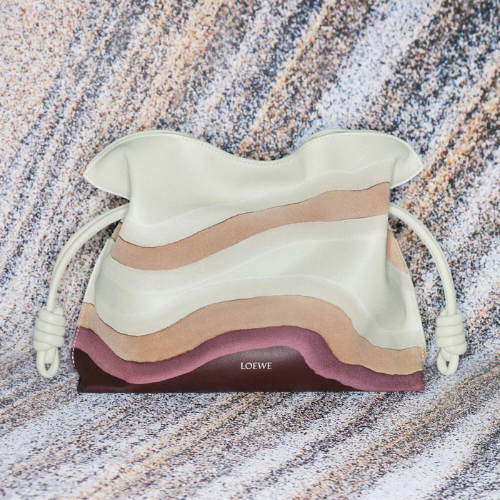
Loewe’s dedication to sustainable manufacturing is seen in its partnership with suppliers who prioritise environmental consciousness and social responsibility. The brand conducts regular audits, to ensure suppliers meet both ethical and environmental standards. Although Loewe has committed to reducing CO2 emissions in its manufacturing processes, there is limited evidence yet showing Loewe’s progress in meeting its science-based emissions reduction target.
While Loewe is making positive strides it faces challenges in its approach to workers’ rights and animal welfare. Only a small portion of Loewe’s supply chain is certified by key labour standards, meaning the brand has limited assurance that workers are receiving fair wages and safe working conditions. Furthermore, its score on the 2022 Fashion Transparency Index, 21-30%, indicates that Loewe could improve its transparency around worker protections and supply chain practices. Loewe was not mentioned in the 2023 Transparency Index.
In terms of animal welfare, Loewe has a policy that aligns with the Five Freedoms, a widely accepted animal welfare standard. However, it lacks clear implementation strategies and continues to use materials like leather, exotic skins, shearling, and feathers without fully tracing these to their origins. This limits its ability to ensure that animal welfare standards are consistently met across all sources.
Loewe’s sustainability page reflects a strong commitment to responsible practices, though some areas could benefit from further transparency. Notably, the brand provides limited details on labour conditions for workers in the downstream supply chain. Additionally, while policies are outlined, there is little information confirming the enforcement of these commitments. Greater transparency in these areas would enhance Loewe’s sustainability profile and reassure consumers of the brand’s dedication to ethical standards.


Visit Loewe here.
Chloé
Chloé, a French luxury house established in 1952 by Gaby Aghion and now owned by the Richemont Group, draws on its founder’s forward-thinking vision to pursue a mission focused on gender equality, inclusivity, and responsible luxury. As a purpose-driven company, Chloé has adopted the “Société à Mission” status, which reinforces its commitment to creating positive social and environmental impact. This mission is further supported by its B Corp certification, emphasising transparency and accountability throughout its operations.
A significant aspect of Chloé’s approach is its focus on empowering women. Currently, women represent a remarkable 80% of the company’s global workforce and occupy 71% of top management positions. Through partnerships with organisations like UNICEF, Chloé supports programs that provide education, skills training, and empowerment to young girls and women worldwide. Chloé’s social sourcing framework further expands these efforts, enabling greater economic inclusion for women in low-income regions by supporting fair-trade certified and socially responsible suppliers.
Chloé’s commitment to environmental responsibility is evident in its use of low-impact materials, partnerships, and innovative technology. As a member of the Leather Working Group and Ellen MacArthur Foundation, Chloé seeks to eliminate waste, reduce its environmental footprint, and promote a circular economy. The brand has set an ambitious goal of achieving a 90% rate of low-impact materials in its product range by 2025, including organic, recycled, and deadstock materials. Additionally, Chloé has committed to reducing carbon emissions per product by 30% from a 2019 baseline, aligning with science-based targets.
In 2023, Chloé unveiled its Digital ID, enhancing transparency and enabling a circular product lifecycle. This innovation empowers customers to track the journey of their items, access care instructions, and facilitate second-hand resale through a partnership with Vestiaire Collective. Through this feature, customers can receive vouchers for Chloé or Vestiaire Collective or donate to UNICEF. Chloé has committed to evolving this technology as part of its broader goal to foster sustainability across the industry.
Animal welfare is another area in which Chloé has made substantial progress. The brand ceased using fur, angora, exotic animal skins, and hair while pledging to exclusively use recycled or certified Responsible Wool Standard wool by 2025.
Chloé publishes an annual mission report that offers a detailed overview of its initiatives and tracks the progress made over recent years. Additionally, the brand releases a comprehensive report addressing other sustainability-related issues and initiatives. Overall, Chloé demonstrates a high level of transparency, providing consumers with in-depth information about its sustainability efforts and ongoing advancements.

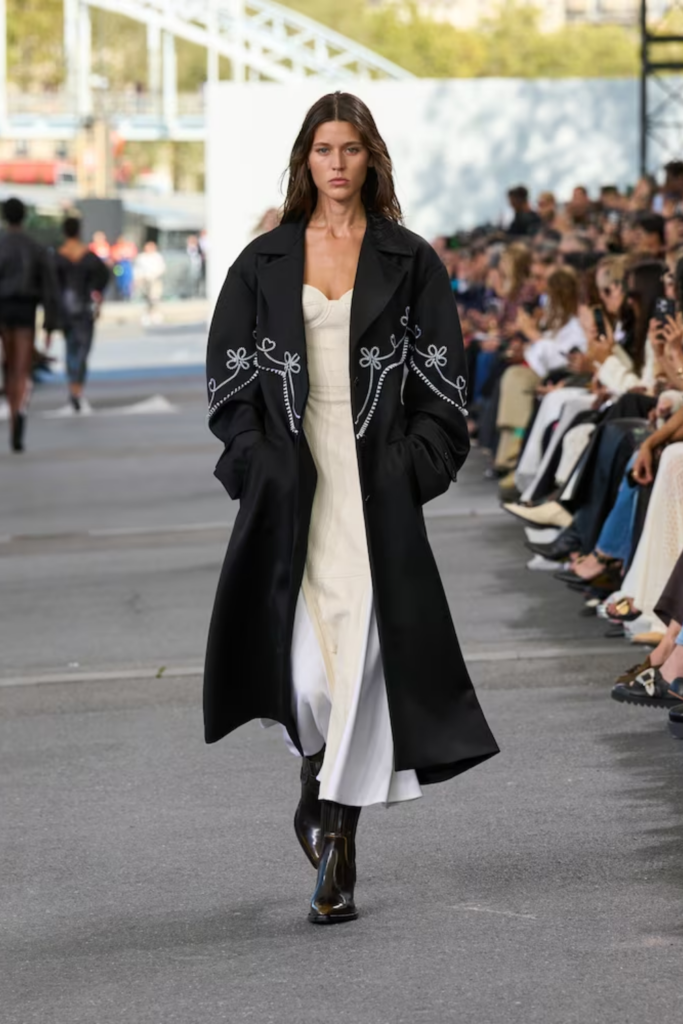

Visit Chloé here.
ACNE Studios
Founded in 1996, Acne Studios is a multidisciplinary fashion house based in Stockholm, Sweden, established by Jonny Johansson. Originally, the brand name ACNE stood for “Associated Computer Nerd Enterprises,” reflecting its beginnings as a creative collective focused on art, fashion, and design. Later, the acronym evolved to signify “Ambition to Create Novel Expressions,” a fitting description of the brand’s ethos. Known for its clean Scandinavian aesthetic infused with eclectic and experimental touches, Acne Studios has gained a global reputation for its innovative approach to contemporary fashion.

Acne Studios is embracing sustainability through initiatives focused on long-lasting design, eco-friendly materials, and a commitment to fair labour practices. At the core of their approach is the principle of “progressive creativity,” using fashion to not only create style but to address environmental and social issues. To extend product life, Acne Studios incorporates durability into the design and conducts extensive wear testing, aiming to have 100% of collections designed for longevity by 2030. They are also working on understanding consumer habits to improve the lifespan of their products, using insights from customer behaviour studies to inform design decisions.
In materials, Acne Studios prioritizes eco-friendly choices, with 68% of its 2022-2023 collection crafted from organic or recycled sources. Wool, for instance, is sourced responsibly, with 70% of the wool certified by the Responsible Wool Standard. Denim is another sustainable focus, using organic cotton and experimenting with regenerative farming practices to reduce environmental impact. Production processes are also evolving, with a target to use lower-impact methods across all collections by 2027, helping reduce water and chemical use, particularly in the denim line.
Acne Studios emphasises ethical sourcing and collaboration with suppliers sharing their sustainability goals. Regular forums and workshops are held to improve industry practices, and the brand’s partnerships ensure that a growing percentage of products are made with high sustainability standards. As part of its dedication to labour rights, Acne Studios has worked with the Fair Wear Foundation since 2008.
The company’s climate strategy aligns with science-based targets, aiming to reduce greenhouse gas emissions by 50% by 2030. Initiatives include shifting to renewable energy, reducing emissions across its supply chain, and membership in the Swedish Textile Initiative for Climate Action to support collaborative climate solutions. Acne Studios also works toward zero waste, using digital tools to reduce physical samples, repurposing leftover materials, and creating capsules from deadstock fabrics. Through circular packaging efforts, the brand has already eliminated plastic in retail packaging and aims for fully circular solutions by 2027.
Acne Studios’ sustainability page offers a detailed look at its initiatives and progress, showing the brand’s commitment to becoming a more ethical and sustainable fashion leader. However, while it covers many aspects thoroughly, expanding information on animal welfare practices would be beneficial, as current details primarily focus on responsible wool sourcing.
Visit Acne Studios here.
Sources
All information in this article is sourced directly from the brands’ official websites. Images link back to their sources, with full credit given to the respective owners.
The header image can be found here.
Image Credit: Vogue Runway