
It’s been over four years since I launched this website, and in that time, I’ve written about countless brands (you can explore them all here). But as the world has changed, so have I. My understanding of sustainability, particularly in the fashion industry, has deepened significantly.
In the early days, I was more accepting of surface-level claims and vague promises. Now, I approach every brand with a more critical eye. Greenwashing has become increasingly common, with many fashion companies making bold sustainability statements, goals, or missions they either can’t fulfil or never intended to. As I’ve grown more aware of these issues, my research methods have evolved to reflect that awareness.
Sustainability is a complex concept, especially in an industry as fast-paced and opaque as fashion. Despite my best efforts, I’ve occasionally misjudged brands. But I’ve also been right about many others. In this post, I want to revisit the brands I still stand behind after all these years.
ArmedAngels
Founded in 2007 by Martin Höfeler and Anton Jurina, ARMEDANGELS set out with a clear mission: to use business as a force to protect life. They’ve been vocal about the need for deep, systemic change—declaring boldly on their website, “If the system is to change, WE must change the system.”
At the heart of ARMEDANGELS’ philosophy is a balance between reducing their footprint and increasing their handprint. That means not just minimising harm, but actively doing good, by making sustainable products more widely available and taking action against climate change.
They do this by choosing low-impact materials wherever possible. Think GOTS-certified cotton, organic linen and wool, recycled cotton, LENZING™ ECOVERO™, and TENCEL™. Their denim, branded as “detox denim,” is made without harmful chemicals and comes with a lower carbon footprint.
As a member of the Fair Wear Foundation, ARMEDANGELS is also committed to ensuring fair, safe, and humane working conditions across its supply chain. They back this up with regular supplier visits and a commitment to transparency.
To further that transparency, they’ve partnered with TextileGenesis™, a platform that uses technology to trace the origins of materials, bringing visibility and accountability to their sourcing.
Notably, in 2022, the brand took a more honest turn in its communication. Where they once described their products as “100% eco,” they now acknowledge that no product is ever truly sustainable, because everything has an impact. It’s a refreshingly candid shift that reflects their evolving understanding of what sustainability means.


Visit ArmedAngels.
No nasties
In 2011, Apurva Kothari founded No Nasties with a simple yet powerful intention: to live a more purpose-driven life. From day one, the brand has offered 100% organic, fair-trade, and vegan clothing. But as they’ve rightly pointed out, “that is no longer enough. The world is on fire.”
So No Nasties raised the bar.
Rather than settling for doing less harm, the brand now creates products that actively remove more CO₂ from the atmosphere than they produce. A bold promise—but one they back up with real action.
First, they reduce their environmental impact by using only organic cotton and maintaining a local, low-impact supply chain. Then they neutralise what remains by investing in carbon offset projects—from solar and wind energy to reforestation. And here’s where it gets impressive: they don’t just offset 100% of their footprint, but 300%. Additionally, they plant three trees for every product sold. All of this is tracked and shared transparently on their website.
But No Nasties doesn’t stop at carbon. They’ve also built a three-part circular system to reduce waste and extend the life of their garments. The “resell” program gives gently worn clothes a second chance through their website. The “mid-life crisis” initiative repairs damaged items and donates them to local thrift stores. And finally, garments that have truly reached the end of the line are recycled into yarn, closing the loop and turning waste back into new beginnings.
Every step of the way, No Nasties keeps people in mind as well. All of their partner factories are both Fair Trade and GOTS certified, ensuring that everyone involved in the process works in safe, healthy, and dignified conditions.
In a world that urgently needs better answers, No Nasties isn’t just asking the right questions—they’re doing the hard work to answer them.


Visit No Nasties.
Veja
Veja was founded in 2005 by childhood friends Sébastien Kopp and François-Ghislain Morillion, who left behind careers in finance to create something with greater meaning: a sneaker brand built on transparency, sustainability, and fairness.
From the beginning, Veja has taken a different path. Its sneakers are crafted using consciously chosen materials—organic cotton, wild rubber tapped from the Amazon, vegetable-tanned leather, and B-mesh, a breathable fabric made entirely from recycled plastic bottles.
Rather than chasing cheap labour or cutting corners, Veja produces most of its goods in Brazil, partnering directly with local cooperatives. One of the most distinctive aspects of their model is how they establish fixed, pre-agreed prices for raw materials such as cotton and wild rubber, thereby protecting producers from market volatility and providing them with financial stability. It’s a slower, more intentional way of doing business.
Transparency isn’t a buzzword for Veja—it’s a core value. The brand openly shares detailed information on its supply chain, including supplier names, sourcing practices, and even its contracts with farmers.
Veja is also a certified B Corp, a reflection of its ongoing commitment to doing better, not just for the planet, but for the people behind every product. Instead of settling for the status quo, Veja continues to ask: how can we improve?
In a world full of noise, Veja’s quiet, consistent work speaks volumes.
Visit Veja.
Kuyichi Pure Goods
Kuyichi was founded in 2000, making it one of the first fashion brands to put sustainability at its core. The idea took shape after one of the founders visited cotton farms in Peru and saw firsthand the environmental degradation and poor labour conditions tied to conventional cotton farming. That experience led to a simple but powerful conclusion: the fashion industry needed to change—from the inside out.
So Kuyichi was born, with a mission to create clothes that are made with respect for both people and the planet. The brand is named after the Peruvian God of rainbows—Kuyichi—a symbol of positivity and transformation, which perfectly reflects their ethos.
From the beginning, Kuyichi has focused on creating timeless pieces using sustainable, low-impact materials. Organic cotton is at the heart of their collections, and through their Cotton in Conversion program, they actively support farmers transitioning to organic farming. They also use recycled cotton, reducing the need for virgin fibres and minimising waste. Other materials include TENCEL™, Lyocell, Modal, linen, hemp, and recycled polyester. Kuyichi avoids synthetic finishes and harsh chemicals, relying instead on low-impact denim washes and techniques like laser, ozone, and e-flow. All leather used is vegetable-tanned, and even their patches are vegan.
Kuyichi’s dedication to sustainability goes beyond materials. The brand openly lists all of its suppliers, supports the Transparency Pledge, and contributes to the Open Apparel Registry. Their production partners focus on responsible dyeing, water recycling, and energy efficiency. They also track the environmental and social footprint of their products and publish these insights in detailed sustainability reports.
Visit Kuyichi Pure Goods.
Kotn
Kotn was founded in 2015 with a mission to make quality, essential clothing—think timeless t-shirts, cosy sweatshirts, and relaxed joggers—while staying true to the values of simplicity, sustainability, and fairness. And as the name subtly hints, their signature material is cotton.
But not just any cotton.
Kotn sources its fibres from family-run farms in Egypt and Portugal, working closely with growers to ensure safe working conditions and fair wages. The cotton they use is known for its superior quality—finer, stronger, and softer than most, which makes for garments that are not only breathable and durable but truly made to last.
Transparency is at the heart of Kotn’s approach. Each item can be traced back through the entire supply chain, from the farm to the fabric to the final product. The brand’s production is OEKO-TEX certified, meaning it’s free from harmful chemicals and aligned with sustainable, ethical standards.
Beyond clothing, Kotn is also invested in community care. In partnership with local NGOs, the brand helps fund and facilitate education in Egyptian farming communities, building schools and supporting programs that provide children with safe, accessible, and quality learning environments.
Kotn is proof that basics don’t have to be basic. With a focus on responsible materials, ethical production, and long-term social impact, they offer wardrobe staples you can feel good about—inside and out.


Visit Kotn.
Sources
Images link back to their sources, with full credit given to the respective owners.
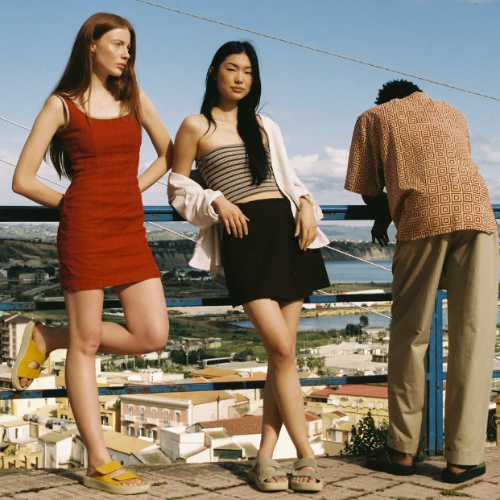
The header image can be found here.
Image Credit: Veja